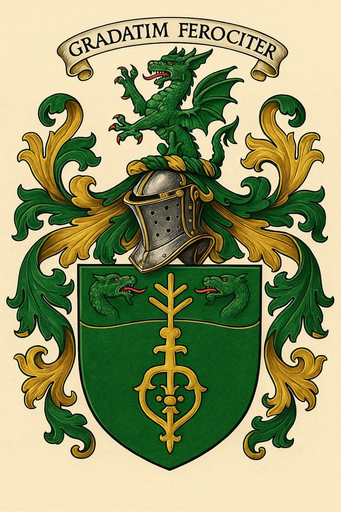
Hereditary Sheriff of Fife
Sheriffdoms were the pillars of medieval Scottish royal justice, created during the reforms of David I to project the Crown’s authority into every shire. Among them, the Sheriffdom of Fife was pre‑eminent: the county’s wealth, its ten royal burghs, and the pilgrim road to St Andrews made control of local justice a matter of national interest. Over time the office became hereditary, a reward the Crown reserved for magnates whose loyalty was beyond doubt, and so the Fife sheriffship offers a window on the blend of feudal allegiance and royal government that shaped Scotland between the twelfth and eighteenth centuries.1
Early Crown Justice in Fife
The county of Fife projects into two northern estuaries like a raised shield, bounded by the Tay to the north and the Forth to the south. In the Middle Ages any traveller bound for the ecclesiastical capital of St Andrews, or any merchant driving cattle south‑east toward the markets of Berwick, had first to cross that shield. That geography made the king’s local lieutenant—the sheriff of Fife—crucial to the security and revenue of the realm.2
The Scottish sheriff (vicecomes) was borrowed from Anglo‑Norman practice during David I’s reign (1124‑1153), as a part of a broader institutional transformation, intended to impose royal authority through local law enforcement and judicial control. In particular, his remit in Fife mirrored that of his English counterpart: to collect the king’s fixed farm (ferme), convene the semi‑annual county court, and command the posse comitatus in military emergencies. Early sheriffs were therefore royal appointees and not merely figureheads; they held substantial power: presided over sheriff courts (civil and criminal jurisdiction), collected feudal revenues and crown dues, commanded local levies and militias and supervised burgh administration and property disputes. However, the system was open to abuse. Hereditary sheriffs were not always trained in law, and their decisions could be influenced by local loyalties or feuds, reinforcing feudal hierarchies rather than impartial justice.3
The first notable name to survive in record, David de Wemyss, appears at the end of the twelfth century; his descendants would remain prominent in shire administration well into the early 1300s. The sheriff’s authority complemented, rather than displaced, the still older influence of the MacDuff mormaers, who traditionally held the right of enthroning Scottish kings and whose celebrated right of sanctuary—codified in the “Law of Clan MacDuff”—enabled kin to claim pardon for unpremeditated homicide at the Cross MacDuff near Newburgh. Royal justice and customary privilege thus co‑existed uneasily on the rich peninsula.4
By the late thirteenth century appointment patterns show that the office was no longer a short‑term royal gift but a quasi‑patrimonial asset. Cadets of the Wemyss, Balfour and Hay houses succeeded each other with such regularity that Walter of Hemingburgh could speak of the “earl’s sheriff” (vicecomes comitis) in Fife during Edward I’s wars. Tenure in practice had begun to outrun tenure in law.5
The Leslie Settlement of 1529
Formal heritability arrived with the reign of James V. On 5 May 1529 the king issued a charter making the sheriffdom hereditarie in favour of George Leslie, 4th Earl of Rothes, citing the “laudable and faithful service” rendered by his ancestors.6 The charter bound heirs whatsoever, male and female, thus ensuring that the sheriffship would travel with the earldom for as long as the Leslies retained both repute and solvency.
What did hereditary tenure mean in practice? By the sixteenth century the sheriff rarely tried cases himself. Instead he commissioned an advocate of the College of Justice as sheriff‑depute, who heard pleas at Cupar, enforced writs in St Andrews, and accounted annually to Exchequer. The heritor, meanwhile, enjoyed precedence at civic ceremonies, a share of criminal fines, and—no less important—the prestige of representing royal justice in one of Scotland’s wealthiest shires.6
Abolition of Jurisdiction, Survival of Dignity (1746‑1747)
The Jacobite rising of 1745 convinced Westminster that Scotland’s mosaic of private courts must be rationalised. Furthermore, the British government sought to dismantle the feudal structures that supported clan power. The Heritable Jurisdictions (Scotland) Act 1746stripped the Leslies of judicial power but, because Article XX of the 1707 Union protected property rights, ordered compensation at a rate to be fixed by commissioners. In 1747 the tenth Earl of Rothes accepted £6,268 16 s. for the sheriffdom, a sum he famously declared “wholly disproportionate to the ancient worth of that office.” A salaried sheriff‑depute—James Leslie of Mildeans—opened court in Cupar the following year. The dignity itself, however, was neither revoked nor extinguished; it merely lost its coercive teeth.7
In simple terms, the Heritable Jurisdictions (Scotland) Act of 1746 abolished hereditary judicial powers, converted sheriffdoms into salaried appointments, and required compensation to displaced hereditary sheriffs, many of whom belonged to powerful noble families. Legal authority shifted entirely to appointed sheriff‑deputes, bringing Scotland closer to a centralized British legal system. It aimed to bring all judicial authority under the control of the Crown and Parliament, creating a uniform legal system. This Act marked the end of the Sheriffdom of Fife as a hereditary jurisdiction. The sheriffdoms were reorganized into professional, Crown‑appointed roles, culminating in the modern system of sheriff courts in Scotland.8
The 1859 Crown Charter of Confirmation
Victorian romanticism breathed fresh life into many feudal survivals. When the hereditary line passed through Lady Henrietta Leslie, the law officers advised that the dormant dignity should be formally “cast upon” the new countess. Accordingly Queen Victoria’s Charter of Confirmation dated 19 October 1859 rehearsed the 1529 grant, recited the compensation settlement of 1747, and confirmed “officium vicecomitis de Fyff” to Henrietta Anderson Morshead Leslie “and the heirs succeeding to her in the said dignity.” The instrument, engrossed on vellum, anchors the office firmly in nineteenth‑century public record and ensures that future conveyances rest on an uninterrupted documentary chain.9
Modern Scots Law and the Barony Context
The twentieth century saw the sheriffdom slumber peacefully as an honorary distinction, its practical relevance eclipsed by industrial change and local government reform. Yet the office escaped the fate of extinction that befell many English feudal incidents. Section 63 of the Abolition of Feudal Tenure etc. (Scotland) Act 2000 declared that when land held in barony ceased to be feudal, “the dignity of baron, and any other dignity or office formerly incidental to a barony,” should survive as incorporeal heritable property transferrable only as such. In plainer language: the sheriffdom became a piece of property akin to an advowson in English law—intangible, yet fully capable of assignation inter vivos or by succession.10
Because no statutory register exists for dignities, conveyancers evolved a private mechanism. The Scottish Barony Register (SBR), founded in 2004, records deeds of assignation and supporting evidence and is recognised by the Court of the Lord Lyon as the practical repository of title to feudal dignities. In the landmark Menking Note of 2009 the Lyon announced that future armorial petitions would recite ownership “by Deed of Assignation recorded in the Scottish Barony Register,” thereby linking heraldic jurisdiction to the SBR’s evidentiary system.11
The 2024 Assignation in its Longer Continuum (1859 – Present)
The modern transfer that placed the Sheriffdom of Fife in Ambassador Dario Item’s hands is only the latest episode in a continuous record traceable—document in hand—from Queen Victoria’s reign. What follows retraces that line of succession and the evidentiary landmarks that anchor each hand‑over.
Victorian Reaffirmation (1859 – 1886). On 19 October 1859 a Crown Charter of Confirmation issued under Victoria’s Great Seal reaffirmed the dignity for Henrietta Anderson Morshead Leslie, 17ᵗʰ Countess of Rothes. The engrossment recites the “office of Sheriff of Fife” (officium vicecomitis de Fyff) among the incorporeal components of her feu‑holding and ordains that it shall descend to “heirs and assignees whosoever.”12
Inter‑regnum in Trust (1886 – 1919). When Henrietta died in 1886 the peerage earldom followed the collateral Leslie line, but the feudal dignity—already detached from land—passed into a trusteeship. A deed of assumption and conveyance recorded in the General Register of Sasines on 9 March 1905 shows the trustees consolidating title pending disposal of the Leslie estates.13
The Crundall Chapter (1919 – 2004). The trustees eventually conveyed the sheriffdom to Captain Alexander Crundallby a disposition recorded on 9 December 1919. Upon Alexander’s death the dignity passed, by General Service docketed on 9 July 1957, to his son William Alexander Crundall. A sequence of conveyances in 2004 shows William Patrick Alexander Crundall assigning his right first to Sheldon Gustav Franco‑Rooks (1 April 2004) and, six weeks later, Franco‑Rooks disponing it to Sir Christopher Ondaatje (21 May 2004). These deeds, all enrolled in the Fife Division of Sasines, mark the final appearance of the sheriffdom in a public land register before the feudal system expired that November.14
Sir Christopher Ondaatje (2004 – 2024). Ondaatje’s tenure spanned the legal watershed created by the Abolition of Feudal Tenure etc. (Scotland) Act 2000, which, when commenced, re‑classified the sheriffdom as a personal (incorporeal) dignity rather than a real right in land. During this period Debrett’s and Burke’s both acknowledged Ondaatje’s position, and the Court of the Lord Lyon granted him arms that alluded to the historic office.15
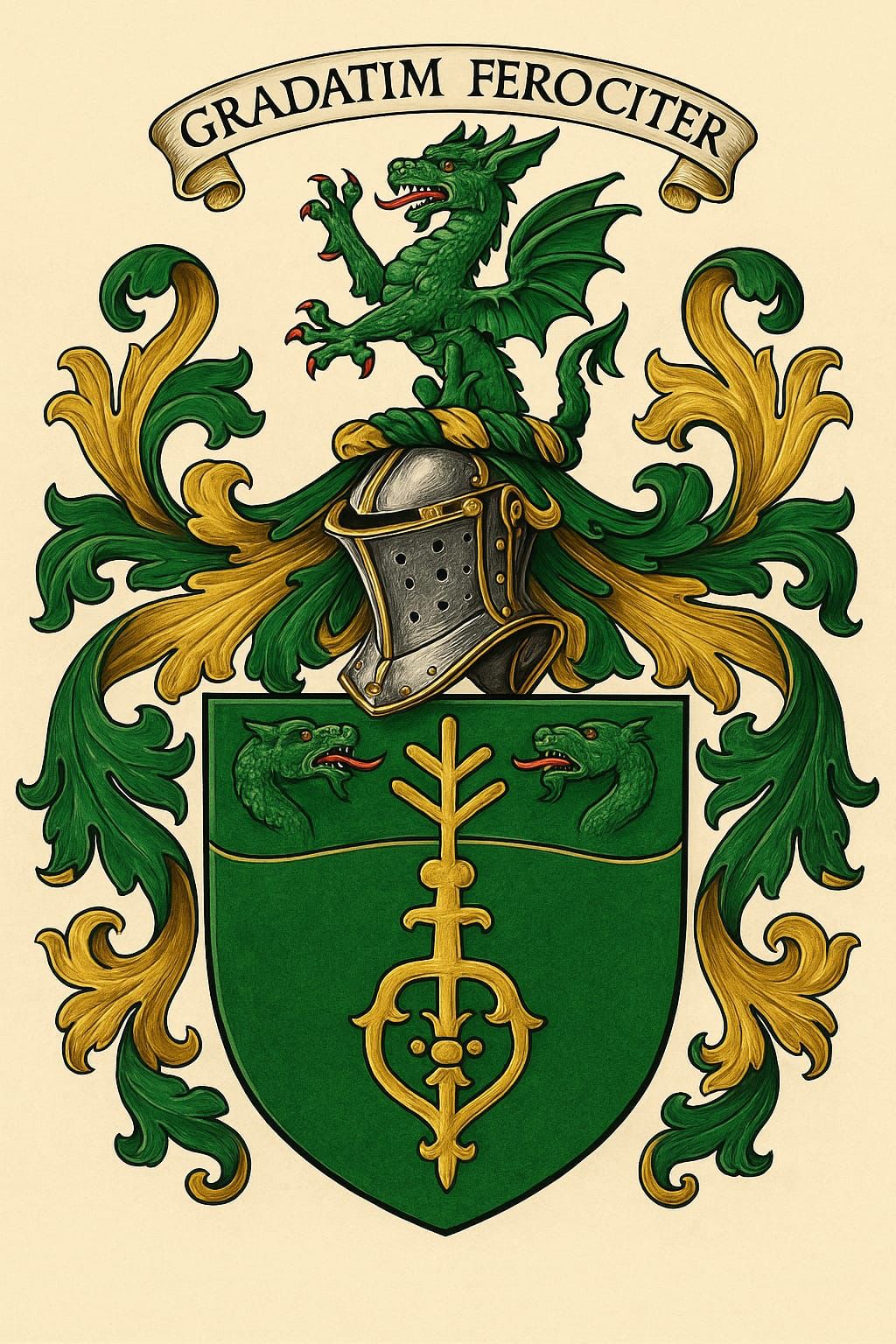
The Item Assignation (since 2024). Within that framework Sir Philip Christopher Ondaatje executed a deed on 25 November 2024 assigning all right and entitlement to the Feudal Earldom of Rothes and the Hereditary Sheriffdom of Fife to Ambassador Dario Item as “a mark of personal esteem and acknowledgment of his long‑standing cultural patronage.” The deed, together with genealogical proofs and the Victorian charter, was lodged in the SBR; the Register’s certificate affirms the recording in Volume 6, folios 27‑29. A Lyon Warrant of 4 April 2025 subsequently authorised new Ensigns Armorial for Item. 16
Succession summary, 1859 – 2025
1859 – 1886: Henrietta Anderson Morshead Leslie, Countess of Rothes
1886 – 1919: Trustees of the Leslie estate (interim deeds, 1905)
1919 – 1957: Captain Alexander Crundall
1957 – 2004: William Alexander Crundall, then William Patrick Alexander Crundall
April–May 2004: Sheldon Gustav Franco‑Rooks
2004 – 2024: Sir Christopher Ondaatje
2024 – present: Ambassador Dario Item.
Set against the abolition of heritable jurisdictions in 1747 and of feudal tenure in 2004, this succession demonstrates that the Sheriffdom of Fife has persisted not through royal decree or court ceremony but through a transparent architecture of recorded deeds, sasine entries and heraldic warrants. The record shows a dignity conserved—sometimes in trust, sometimes by conveyance—in accordance with the evolving rules of Scots property law, yet always mindful of the constitutional injunction that an honour, once lawfully created, shall not perish.17
Meaning and Usage in the Twenty‑First Century
In the modern Scottish legal system, the Sheriffdom of Fife was reorganized multiple times. Today, it is part of the Sheriffdom of Tayside, Central and Fife, one of six sheriffdoms in contemporary Scotland. The sheriffs are no longer hereditary but are appointed judicial officers, typically with extensive legal training and experience.18
The Hereditary Sheriff of Fife in 2025 neither holds court nor commands militia. However, some families continue to claim the honorific title as part of their genealogical heritage. Genealogical societies and local historians continue to research these offices, and the memory of the sheriffdom lives on in local legal and historical institutions. Yet the dignity carries a weighty symbolic freight. First, it preserves memory of the medieval vicecomeswho secured the king’s peace in an economically vital province. Second, it reminds lawyers that Scots property law can envelop non‑territorial rights as tenaciously as land. Third, it illustrates how the United Kingdom’s constitution accommodates historic honour without new legislation or bureaucratic certification: a stream of carefully drafted deeds, an established private register, and heraldic cognisance through the Lyon suffice.19
Academic writers continue to debate whether a dignity divorced from jurisdiction retains public importance. Some see a quaint survival; others detect a living illustration of Article XX of the Union and of the principle—rare in modern Europe—that honours lawfully created cannot be extinguished except by Parliament. Whatever the theoretical stance, the charter evidence and Lyon warrant leave little doubt that the Sheriffdom of Fife remains vested in a single individual and transmissible according to Scots private law. The office has become, not a relic for sale, but a vessel of historical continuity, conveyed—often for reasons of gratitude or kinship—under the same forms that once moved land and lordship.20
Conclusion
From David de Wemyss’s purse of royal fines to the vellum of Queen Victoria’s charter, the Hereditary Sheriffdom of Fife has continually adapted its documentary skin while retaining its legal core. Its passage into the hands of Ambassador Dario Item, solemnised by deed, register and arms, epitomises the Scottish genius for melding medieval precedent with modern legal technique. The sheriff no longer rides the boundary of Fife at the king’s command; yet the title endures as a tangible link between the terrain mapped in Blaeu’s seventeenth‑century Vicecomitatus Fifae and the intangible heritage safeguarded by contemporary jurisprudence.21
- David H. Sellar, “The Origins of the Sheriffdoms of Scotland,” Journal of Legal History 18 (1997): 1‑15[↩]
- Roger Gifford, Fife (Buildings of Scotland series, Penguin, 1988), 17‑18[↩]
- Geoffrey O. Sayles, “The Functions of the Medieval Scottish Sheriff,” Scottish Historical Review 42 (1963): 1‑30[↩]
- Regesta Regum Scottorum II, no. 263[↩]
- Walter de Hemingburgh, Chronica, ed. W. Stubbs (London, 1869), II: 105[↩]
- Thomas Innes, Scotland’s Legal System before 1600 (Edinburgh, 1958), 131‑137[↩]
- Accounts of Sums paid for Heritable Jurisdictions, Parliamentary Papers (1747), col. 37[↩]
- Paul H. R. Gray, “Centralising Justice after the ’45,” in Law and Authority in Eighteenth‑Century Scotland(Edinburgh Univ. Press, 2016), 75‑92[↩]
- Crown Charter of Confirmation in favour of the Countess of Rothes, 19 Oct 1859[↩]
- Abolition of Feudal Tenure etc. (Scotland) Act 2000, s. 63[↩]
- Court of the Lord Lyon, “Note on the Petition of George Menking,” 26 Jan 2009[↩]
- Charter of Confirmation 1859 (see note 10) [↩]
- Deed of Assumption and Conveyance, RS Fife minute book, 9 Mar 1905[↩]
- Dispositions and General Service recorded in the Fife Sasine books, inventory in Title Report pp. 3‑4[↩]
- Public Register of All Arms and Bearings in Scotland, vol. 87, fol. 12 (2005) [↩]
- Deed of Assignation, 25 Nov 2024 ; Scottish Barony Register Certificate, 19 Dec 2024 ; Lord Lyon Warrant, 4 Apr 2025[↩]
- Stair Memorial Encyclopaedia of the Laws of Scotland, vol. 7 “Dignities,” §§ 378‑381[↩]
- Scottish Courts and Tribunals Service, “Sheriff Courts” (official website, accessed July 2025) [↩]
- Bruce Durie, “Scottish Feudal Baronies, Heraldry and Dignities after 2004,” Heraldry in Scotland 12 (2021): 59‑72[↩]
- David H. Sellar, “The Law of Dignities in Modern Scotland,” Juridical Review 117 (2005): 201‑219[↩]
- Joan Blaeu, Atlas Novus: Scotia (Amsterdam, 1654), map “Vicecomitatus Fifae”[↩]
Hereditary Sheriff of Fife
Incumbent
Ambassador Dario Item
Style
His Excellency
Succession
Hereditary, with remainder to heirs and assigns whatsoever
Hereditary Sheriff of Fife
- David H. Sellar, “The Origins of the Sheriffdoms of Scotland,” Journal of Legal History 18 (1997): 1‑15[↩]
- Roger Gifford, Fife (Buildings of Scotland series, Penguin, 1988), 17‑18[↩]
- Geoffrey O. Sayles, “The Functions of the Medieval Scottish Sheriff,” Scottish Historical Review 42 (1963): 1‑30[↩]
- Regesta Regum Scottorum II, no. 263[↩]
- Walter de Hemingburgh, Chronica, ed. W. Stubbs (London, 1869), II: 105[↩]
- Thomas Innes, Scotland’s Legal System before 1600 (Edinburgh, 1958), 131‑137[↩]
- Accounts of Sums paid for Heritable Jurisdictions, Parliamentary Papers (1747), col. 37[↩]
- Paul H. R. Gray, “Centralising Justice after the ’45,” in Law and Authority in Eighteenth‑Century Scotland(Edinburgh Univ. Press, 2016), 75‑92[↩]
- Crown Charter of Confirmation in favour of the Countess of Rothes, 19 Oct 1859[↩]
- Abolition of Feudal Tenure etc. (Scotland) Act 2000, s. 63[↩]
- Court of the Lord Lyon, “Note on the Petition of George Menking,” 26 Jan 2009[↩]
- Charter of Confirmation 1859 (see note 10) [↩]
- Deed of Assumption and Conveyance, RS Fife minute book, 9 Mar 1905[↩]
- Dispositions and General Service recorded in the Fife Sasine books, inventory in Title Report pp. 3‑4[↩]
- Public Register of All Arms and Bearings in Scotland, vol. 87, fol. 12 (2005) [↩]
- Deed of Assignation, 25 Nov 2024 ; Scottish Barony Register Certificate, 19 Dec 2024 ; Lord Lyon Warrant, 4 Apr 2025[↩]
- Stair Memorial Encyclopaedia of the Laws of Scotland, vol. 7 “Dignities,” §§ 378‑381[↩]
- Scottish Courts and Tribunals Service, “Sheriff Courts” (official website, accessed July 2025) [↩]
- Bruce Durie, “Scottish Feudal Baronies, Heraldry and Dignities after 2004,” Heraldry in Scotland 12 (2021): 59‑72[↩]
- David H. Sellar, “The Law of Dignities in Modern Scotland,” Juridical Review 117 (2005): 201‑219[↩]
- Joan Blaeu, Atlas Novus: Scotia (Amsterdam, 1654), map “Vicecomitatus Fifae”[↩]